
- All
- Product Name
- Product Keyword
- Product Model
- Product Summary
- Product Description
- Multi Field Search
Views: 0 Author: Site Editor Publish Time: 2026-03-10 Origin: Site


Sushi is one of the most visually intentional cuisines in the world. Each roll is a small work of art—layers of fish, rice, and vegetables arranged with precision, then sliced to reveal a clean, symmetrical cross-section. Chefs spend years perfecting that craft. Yet the moment a roll gets packed into a flat plastic tray for delivery or takeout, the presentation collapses—literally.
Crushed edges, shifted fillings, leaking soy sauce packets. These are the familiar casualties of traditional sushi packaging, and for restaurants and food businesses trying to stand out, they represent a real problem. A poor unboxing experience doesn't just disappoint customers—it undermines the quality of the food itself.
That's where the sushi pop up container comes in. This innovative packaging format is reshaping how sushi reaches customers, keeping rolls intact from kitchen to hand, and turning the act of eating into something worth sharing. This post explores how it works, why it matters, and what to look for when choosing the right format for your business.
A sushi pop up container—also known as a pop up sushi packaging tube or sushi push pop tube—is a cylindrical, food-grade packaging solution designed to hold a single sushi roll securely. Unlike flat boxes that leave rolls free to shift around, the tube's snug fit cradles the roll in place during transit.
The defining feature is its push mechanism. A module built into the top of the tube acts as both a sauce reservoir and a plunger. When the customer is ready to eat, they press the module down, which gently pushes the roll out from the bottom—intact, clean, and ready to eat or dip. No fumbling, no mess, no collapsed presentation.
This two-component system consists of:
A food-grade paperboard main chamber that holds the sushi roll and prevents movement during transit
An integrated sauce and push module made from food-grade plastic (PP) that pre-seals the condiment and doubles as the activation plunger
The result is a one-handed, hygienic, and visually engaging eating experience.
The structural design of a sushi pop up container addresses the most common causes of presentation failure in transit.
Presentation Problem | Traditional Packaging | Sushi Pop Up Container |
|---|---|---|
Roll shifting during delivery | High risk—flat trays allow lateral movement | Eliminated—snug cylindrical fit holds roll in place |
Crushed or deformed rolls | Common due to stacking and flat lids | Prevented by rigid cylindrical walls |
Sauce leaks contaminating the roll | Frequent with loose packets | Controlled—sauce is pre-sealed in the push module |
Messy eating experience | Requires plates, napkins, extra tools | Clean, one-handed push mechanism |
Loss of visual appeal on arrival | Often significant | Roll delivered intact, exactly as prepared |
Each of these factors directly affects the customer's perception of quality. Packaging that protects the food also protects the brand.
Beyond protecting presentation, the custom size sushi pop up packaging tube offers operational and brand advantages that flat packaging simply cannot match.
Brand visibility: The cylindrical surface area is ideal for high-impact printing. A logo and custom design wrapped around the tube becomes a mobile brand asset—highly visible in delivery bags, on countertops, and in social media posts from customers.
Reduced complaints: The robust cylindrical shape resists crushing far better than flat boxes, which translates directly into fewer customer service issues related to damaged orders.
Portion clarity: Each tube holds one standard roll, making portion control straightforward and consistent across every order.
Shareability: The push-to-eat mechanism creates a memorable, interactive moment that customers naturally want to photograph and post. That kind of organic content has real marketing value.
Sustainability: Many sushi pop up containers are made from FSC-certified, recyclable paperboard, reducing material use compared to a traditional box-plus-sauce-packet combination.
Not all sushi pop up containers are created equal. When evaluating options for your business, these are the specifications that matter most:
Feature | What to Look For | Why It Matters |
|---|---|---|
Material (Body) | Food-grade, FSC-certified paperboard | Safe for direct food contact; supports sustainability goals |
Material (Sauce Module) | Food-grade plastic (PP) | Leak-proof barrier for liquid condiments |
Diameter | ~50mm (fits standard maki/hosomaki) | Ensures the roll is held securely without compression |
Length | Adjustable from 70mm to 120mm | Accommodates different roll sizes and specialty formats |
Print Quality | High-resolution offset or flexographic printing | Sharp, vibrant branding that holds up in the real world |
Finishing Options | Gloss/matte lamination, spot UV coating | Durability and premium visual appeal |
Sauce Compartment | Adjustable volume for different condiment types | Flexibility for soy sauce, ponzu, eel sauce, etc. |
For businesses with unique roll dimensions or specialty menus, the ability to order a custom size sushi pop up packaging tube is essential. Standard diameters fit most maki rolls, but futomaki, temaki-style rolls, or bite-sized nigiri portions may require adjusted dimensions.
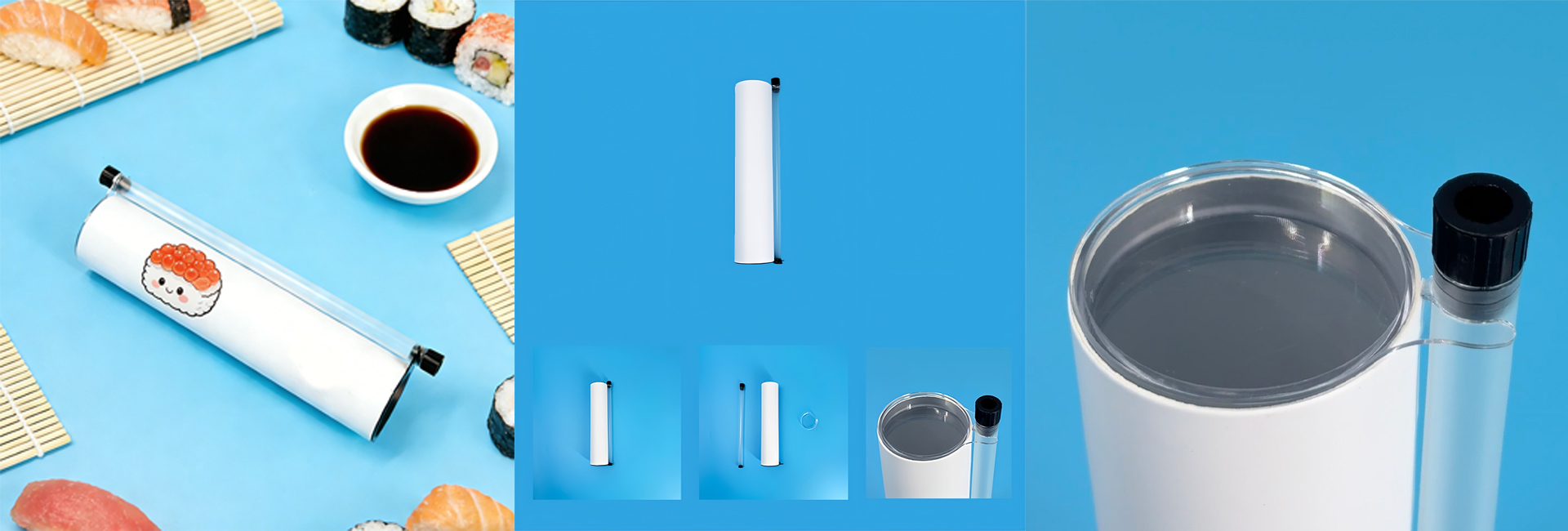
Yes—and for many businesses, custom branding is the most compelling reason to make the switch. Hannpack's sushi pop up packaging tube is built on a fully customizable platform, covering:
Dimensions: Diameter and length tailored to any sushi format
Graphics and branding: Full-color printing with logo placement and design assistance
Material finishes: Recycled paperboard options and water-resistant coatings
Sauce compartment: Adjustable volume for thicker or thinner condiment types
Packaging format: Bulk cartons or retail-ready sleeves to suit different supply chains
This flexibility makes the format suitable for everything from high-volume delivery chains to boutique sushi restaurants looking to create a signature unboxing experience.
Category | Traditional Box/Tray | Sushi Pop Up Container |
|---|---|---|
Presentation on arrival | Often compromised | Consistently intact |
Ease of eating | Requires additional tools | One-handed, no mess |
Branding surface | Flat lid with limited visibility | Full-wrap cylinder with high visual impact |
Social media potential | Low | High—interactive mechanism drives shares |
Portability | Bulky, prone to tipping | Compact, cylindrical, stable |
Sustainability | Variable | Recyclable paperboard options available |
Sauce integration | Separate packets (often lost or leaking) | Pre-sealed within the push module |
The comparison makes a straightforward case. Traditional packaging was designed for containment. The sushi pop up container is designed for experience.
Switching packaging formats is a real decision that involves cost, logistics, and supplier reliability. For sushi businesses considering the move to a pop up sushi packaging tube, the key steps are:
Audit your current packaging failures—identify how often rolls arrive damaged, how many customer complaints relate to presentation, and how much sauce waste or leakage is occurring.
Define your roll dimensions—measure your standard rolls to determine the tube diameter and length you need before requesting samples.
Brief your branding requirements—custom printing requires artwork in the correct format; prepare your logo files and brand guidelines in advance.
Request samples before committing to volume—test the mechanism with your actual rolls and condiments to confirm fit and function.
Evaluate supplier reliability—look for manufacturers with end-to-end quality control and the capacity to scale with your business.
Presentation doesn't end at the plate. For takeout and delivery businesses, the packaging is the presentation—and it's the last thing a chef controls before the food reaches the customer. A sushi pop up container closes that gap, preserving the quality of the roll and delivering it in a way that's clean, engaging, and brand-consistent.
For restaurants and food businesses ready to make that upgrade, explore Hannpack's full range of sushi pop up packaging tube options, including custom size sushi pop up packaging tube formats suited to any roll size or branding requirement. Contact the Hannpack team for samples, specifications, and custom project quotes.


