
- All
- Product Name
- Product Keyword
- Product Model
- Product Summary
- Product Description
- Multi Field Search
Views: 0 Author: Site Editor Publish Time: 2026-03-13 Origin: Site


The global food industry is in a constant state of evolution, driven by changing consumer lifestyles, the demand for convenience, and an increasing emphasis on sustainability. In the realm of quick-service restaurants (QSR), sushi has transitioned from a niche delicacy to a mainstream staple. However, traditional sushi packaging—often bulky plastic clamshells or flimsy cardboard boxes that require chopsticks and a flat surface to eat—fails to meet the needs of the modern, mobile consumer. Enter the sushi push pop tube, a revolutionary packaging solution that is reshaping how sushi is sold, transported, and consumed.
For wholesalers, distributors, and restaurant chains looking to innovate their product lines, understanding the potential of this packaging format is crucial. This comprehensive guide explores the wholesale landscape of sushi push pop tube solutions, detailing dimensions, customization options, usage methods, and the economic advantages of factory-direct sourcing. Whether you are a startup looking for a unique selling proposition or an established chain aiming to reduce plastic waste, this article provides the insights needed to make informed procurement decisions.
The traditional sushi dining experience is seated and deliberate. It involves soy sauce dishes, wasabi mounds, and the dexterity required to use chopsticks. While this remains popular for dine-in experiences, the "grab-and-go" market demands something different. Modern consumers in Europe and North America often eat while walking, commuting, or working at standing desks. They need food that is single-handed, mess-free, and portable.
The sushi push pop tube addresses this gap perfectly. By encasing sushi rolls in a sturdy, cylindrical paper tube, the product becomes akin to a handheld snack. The mechanism is simple yet ingenious: the consumer pushes the bottom of the tube, elevating the sushi to the top, allowing them to take a bite without ever touching the food or needing utensils. This design eliminates the need for chopsticks entirely, solving a major pain point for outdoor consumption.
Furthermore, the shift away from single-use plastics is a regulatory and ethical imperative in many Western markets. Traditional plastic blister packs are increasingly frowned upon by environmentally conscious consumers. Paper-based tubes offer a biodegradable, recyclable, and compostable alternative that aligns with corporate sustainability goals (ESG). Adopting sushi push pop tube packaging is not just a logistical upgrade; it is a brand statement that resonates with the values of the modern diner.
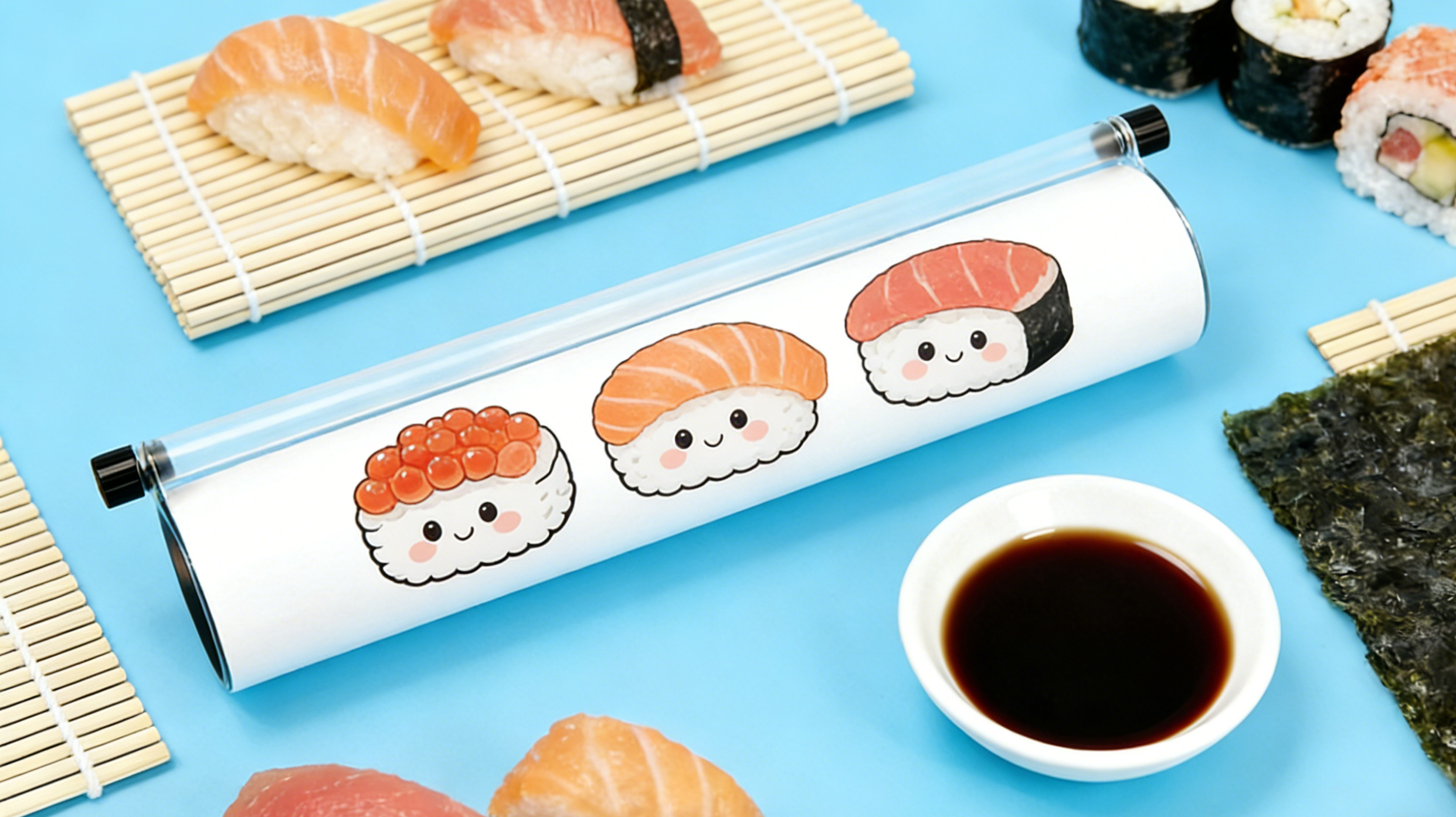
When sourcing packaging for food products, precision is paramount. The integrity of the sushi roll must be maintained during transport, and the user experience must be seamless. The industry standard for these tubes has converged on specific dimensions that balance capacity with ergonomics.
The most widely adopted size for a standard maki roll or hand roll is D50mm x H220mm (Diameter 50mm, Height 220mm).
l Diameter (50mm): This width is carefully calculated to accommodate standard hosomaki (thin rolls) and uramaki (inside-out rolls) without crushing the ingredients. It is narrow enough to be held comfortably in one hand by the average adult but wide enough to prevent the rice from sticking to the sides excessively.
l Height (220mm): This height provides sufficient vertical space for a full-sized roll (typically cut into 6-8 pieces) plus the mechanical pusher component at the bottom. It also allows for branding space on the upper portion of the tube.
Below is a comparison of standard sizing options available in the wholesale market:
Dimension Type | Diameter (mm) | Height (mm) | Best Suited For | Capacity Estimate |
Standard | 50 | 220 | Standard Maki/Uramaki | 6-8 Pieces |
Slim | 40 | 220 | Hosomaki / Vegetable Rolls | 4-6 Pieces |
Wide | 60 | 220 | Temaki / Large Specialty Rolls | 1 Large Hand Roll |
Mini | 35 | 150 | Appetizer Sizes / Kids Packs | 2-4 Pieces |
While custom sizes can be manufactured, the D50*H220mm specification offers the best economies of scale. Most sushi push pop tube factory direct price listings are based on this standard dimension, making it the most cost-effective choice for wholesalers starting their journey. Deviating from standard sizes often incurs higher mold costs and longer lead times, which may not be justified unless the product offering is highly specialized.
One of the primary selling points of this packaging is its intuitive nature. However, for first-time users, a brief explanation can enhance the experience. When marketing these products, it is beneficial to include simple instructions on the packaging or via QR codes linking to tutorials.
1. Receive and Inspect: The customer receives the sealed tube. The top is usually covered with a breathable film or a perforated paper lid that maintains freshness while allowing the aroma of the sushi to escape slightly, enticing the buyer.
2. Open the Lid: The consumer peels back the top seal. Unlike a box that opens fully, this keeps the lower portion of the sushi protected.
3. The Push Mechanism: The user holds the tube firmly in one hand. With the thumb of the other hand (or the same hand if dexterous), they press the bottom disc or "pusher" upward.
4. Elevation: As the bottom is pushed, the sushi roll rises smoothly out of the top of the tube. The internal friction is calibrated so the roll moves up but does not fall out accidentally.
5. Consumption: The consumer takes a bite directly from the exposed top. As they finish the top section, they push again to reveal more.
6. Disposal: Once finished, the entire paper tube can be flattened and placed in paper recycling bins. No sticky plastic containers or disposable chopsticks remain.
This method supports the concept of sushi push pops without chopsticks. By removing the dependency on utensils, businesses can expand their sales locations to areas where eating with chopsticks is impractical, such as music festivals, busy train stations, amusement parks, or corporate hallways. It democratizes sushi consumption, making it accessible to those who have never mastered chopstick etiquette.
In the competitive food retail landscape, shelf appeal is everything. A generic brown tube might function well, but it fails to build brand equity. One of the strongest advantages of opting for wholesale sushi push pop tube solutions is the ability to fully customize the design.
Custom logo sushi push pop tube design allows brands to turn their packaging into a mobile billboard. Since the tube offers a continuous 360-degree canvas, brands can utilize this space for:
l Brand Storytelling: Printing the history of the sushi chef or the source of the ingredients.
l Nutritional Information: Clearly displaying calories and allergens, which is a legal requirement in many US and EU jurisdictions.
l Interactive Elements: Including QR codes that link to loyalty programs, ingredient sourcing videos, or social media challenges.
l Visual Impact: Using high-quality flexographic or offset printing to showcase vibrant images of the sushi inside, triggering appetite appeal.
Advanced manufacturers offer various finishing options, such as spot UV coating to make logos pop, embossing for a tactile premium feel, or even window cutouts (covered with compostable film) to show the product directly. When contacting a sushi push pop tube supplier contact, it is essential to discuss your artwork requirements early in the process. Most suppliers require vector files (AI or EPS format) and will provide a digital proof before mass production begins.
For limited edition flavors or seasonal promotions, short-run digital printing is becoming more accessible, allowing brands to test new designs without committing to massive minimum order quantities (MOQs). This flexibility is crucial for agile marketing strategies in the fast-paced food industry.
When deciding where to procure these packaging solutions, businesses generally face two paths: buying through local distributors or sourcing directly from the factory. Each has its merits, but for those looking to optimize margins, the factory-direct route is often superior.
Seeking a sushi push pop tube factory direct price can result in significant cost savings, typically ranging from 20% to 40% compared to distributor markups. This is particularly important for high-volume users like supermarket chains or franchise networks. Direct factory engagement also allows for greater control over the production timeline, material specifications, and quality assurance protocols.
However, sourcing directly, often from manufacturing hubs in Asia, requires careful due diligence. Key factors to consider include:
l Food Safety Certifications: Ensure the factory holds relevant certifications such as FSC (for sustainable paper), FDA compliance (for US markets), or LFGB (for European markets). The inks and adhesives used must be food-grade and non-toxic.
l MOQs: Factories often have higher Minimum Order Quantities. A typical run might start at 10,000 to 50,000 units. Smaller businesses may need to form consortia or look for factories offering "stock sizes" with custom printing to lower the entry barrier.
l Lead Times: Ocean freight and production scheduling can lead to lead times of 4-8 weeks. Accurate demand forecasting is essential to avoid stockouts.
l Communication: Clear communication channels are vital. When you reach out to a sushi push pop tube supplier contact, ensure they have English-speaking account managers and a responsive support team to handle any issues with artwork or shipping logistics.
Despite the complexities, the long-term benefits of a direct relationship include the ability to iterate on designs quickly, negotiate better terms for repeat orders, and secure exclusive rights to certain structural innovations.
The adoption of sushi push pop tube packaging is part of a broader trend toward "functional packaging." Consumers no longer view packaging merely as a container; they expect it to add value to the product experience. The success of similar formats in other industries—such as push-up ice creams, lip balms, and glue sticks—has paved the way for savory applications.
In the United States and Europe, the rise of "sushi burritos" and hand-held Asian fusion foods indicates a growing appetite for portable formats. The sushi push pop tube fits perfectly into this niche. Moreover, as cities implement stricter bans on single-use plastics, the paper-based nature of these tubes positions them as a future-proof solution.
Retailers are also noticing the space-saving benefits. Cylindrical tubes can be displayed in vertical racks, countertop spinners, or even vending machines, maximizing retail footprint efficiency compared to bulky boxes. This versatility opens up new distribution channels, such as unmanned convenience stores and airport kiosks, where space is at a premium.
Another emerging trend is the integration of smart packaging. Imagine a sushi push pop tube with a time-temperature indicator printed on the side, changing color if the sushi has been left out too long. Or tubes embedded with NFC chips that verify authenticity and traceability. As technology costs decrease, these features will become standard in premium wholesale offerings.
The transition to sushi push pop tube packaging represents a strategic move for any business in the sushi supply chain. It combines operational efficiency with enhanced consumer experience, all while addressing critical environmental concerns. The standard D50*H220mm size offers a proven, ergonomic solution for the majority of sushi rolls, ensuring that the product arrives fresh and is easy to consume anywhere.
By understanding how to use sushi push pop tubes, businesses can effectively market the convenience factor to their end customers, promoting the idea of sushi push pops without chopsticks as a liberating dining experience. The opportunity for custom logo sushi push pop tube design ensures that brands can maintain a strong visual identity in a crowded marketplace.
For those ready to scale, investigating sushi push pop tube factory direct price options is the logical next step. Engaging with a reliable sushi push pop tube supplier contact will provide the necessary guidance on MOQs, lead times, and certification requirements. As the market continues to evolve toward convenience and sustainability, the sushi push pop tube stands out as a leading innovation, poised to become the standard for on-the-go sushi consumption globally.
Wholesalers and retailers who adopt this solution now will position themselves as leaders in the next generation of food packaging, capturing the attention of mobile consumers and contributing to a greener planet. The future of sushi is not just in the taste; it is in the package.
sushi push pop tube
sushi pop up container
Sushi pop up packaging tube


